Non-abrasive automotive cleaning
Dry Ice Cleaning in Mansfield
Dry ice cleaning at our Mansfield Woodhouse unit strips oil, road film and failed coatings off underbodies, chassis and wheel arches, without water, chemicals or abrasive damage. It is how we clean anything on the car, by appointment.
What dry ice cleaning is
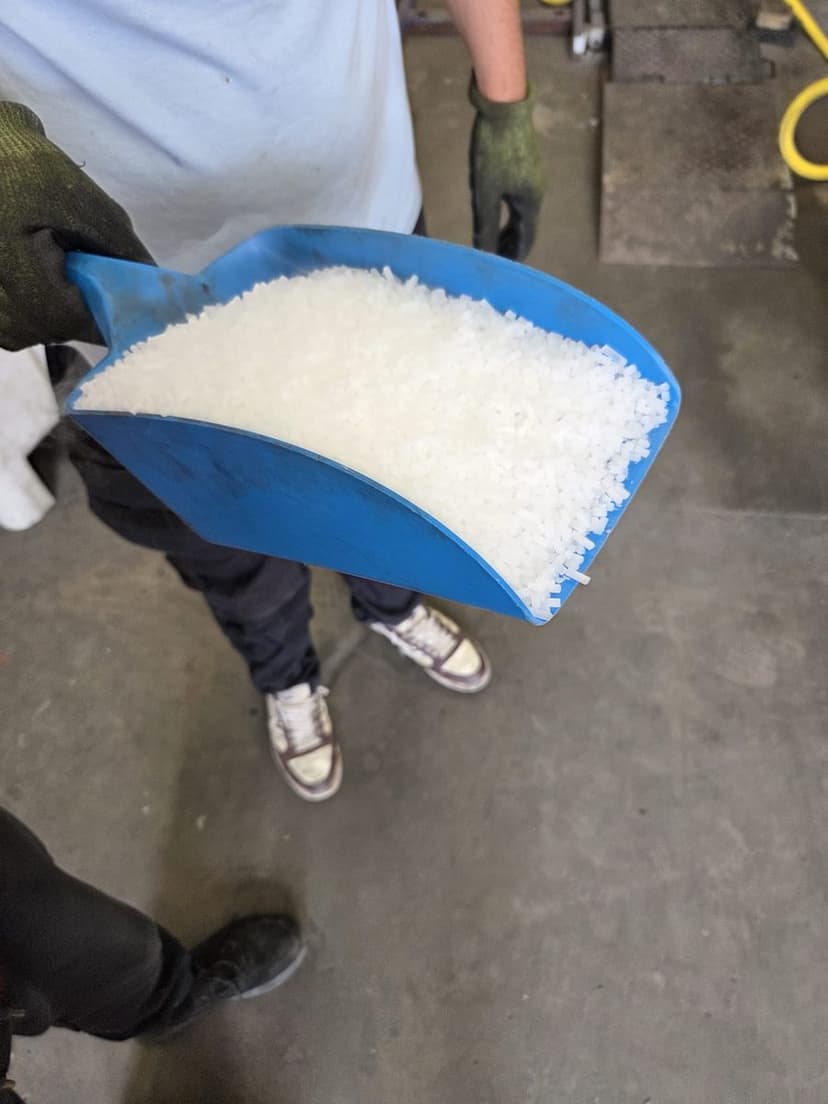
Dry ice blasting fires solid dry ice pellets at a contaminated surface at high velocity. On impact the pellets sublimate, turning straight from solid to gas, and the sudden expansion lifts the contamination away from the metal beneath it. No water, no grit and no cleaning agents are involved, so nothing is left behind to clean up.
It suits confined, mechanically complex areas where wet or abrasive cleaning methods would do more harm than the dirt they are removing. Dry ice blasting and dry ice cleaning are two names for the same job, and the method is well established in the automotive industry, with specialist operators working across the UK.
The difference on a real job
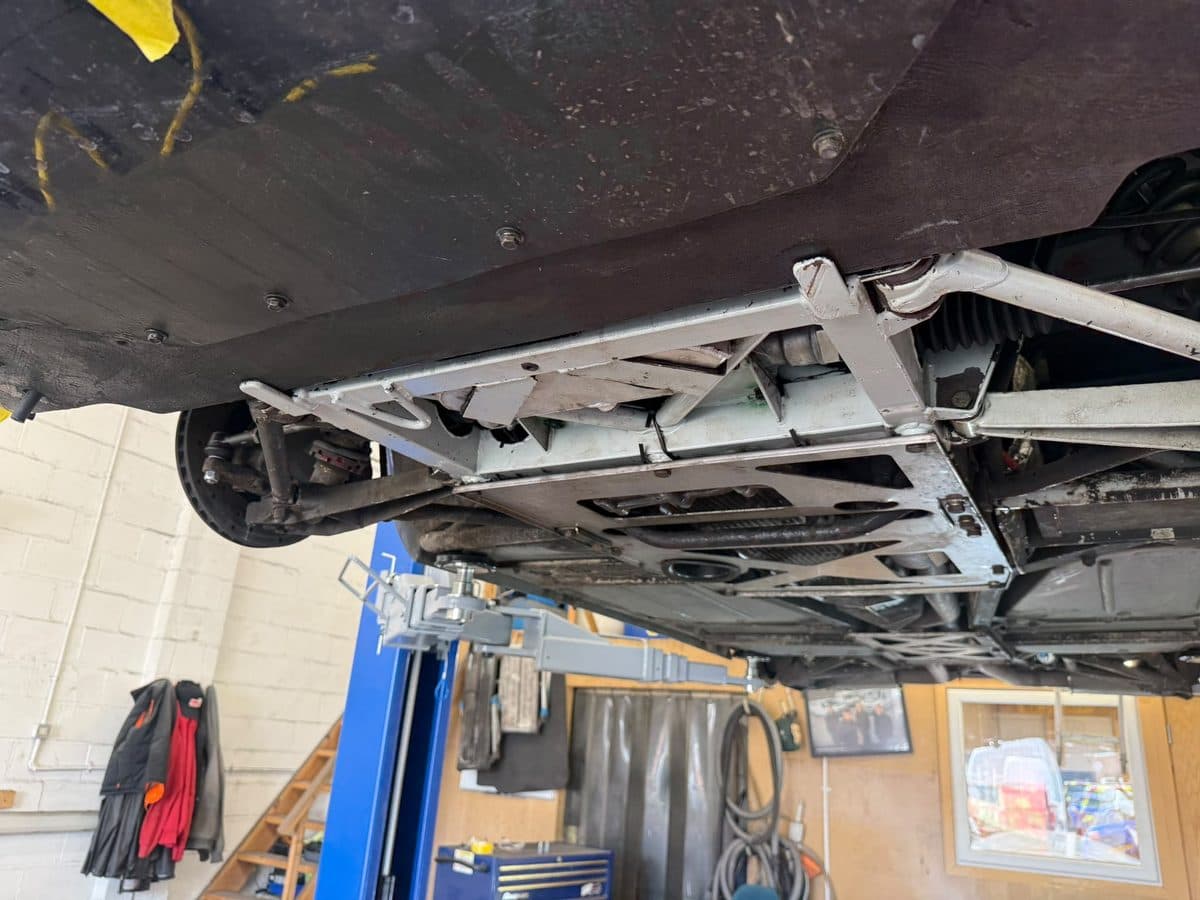
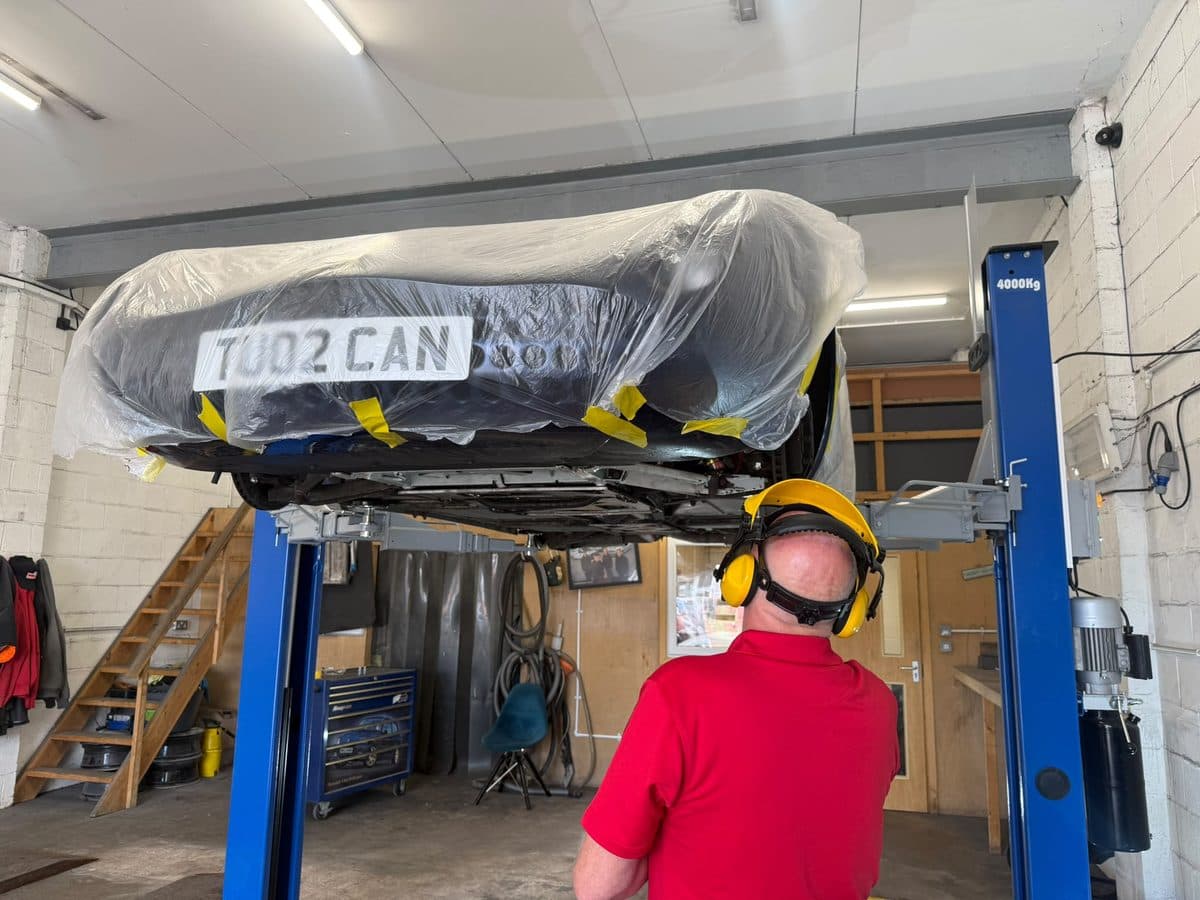
Masking and preparation. Bodywork, trim and anything else we are not treating gets wrapped and taped before the first dry ice pellets are fired. This is the stage that protects the car, and it is worth the time it takes.
The clean. We work the applicator across the surface area by area. The CO₂ gas disperses as we go, so there is no slurry to collect and no rinsing stage afterwards.
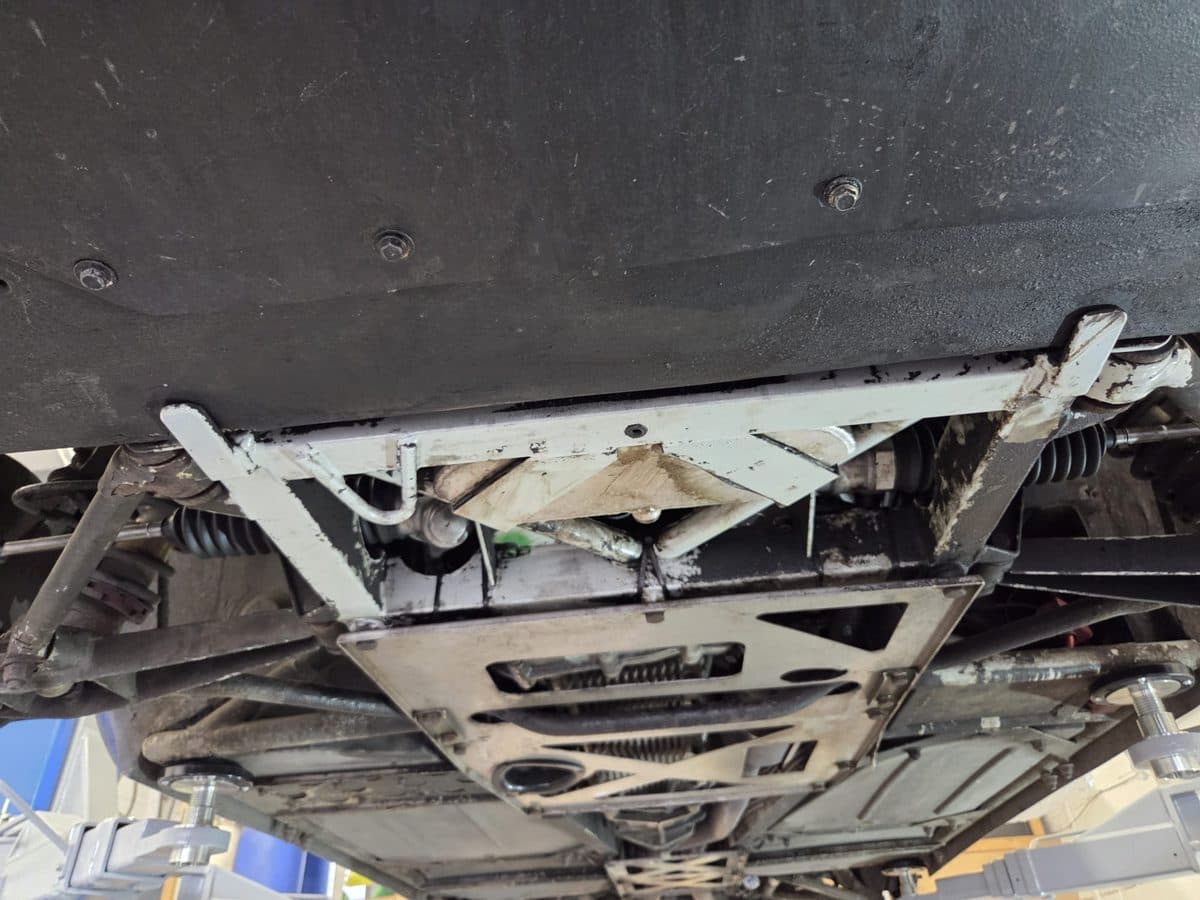
Inspection. With the contamination off, the metal underneath can be seen properly for the first time. Corrosion, previous repairs and failed coatings all become visible, which is often the point of the exercise.
How the process works
The car comes to the unit and goes up on the lift. From there the cleaning process runs in three stages, and how long each takes depends on how much contamination is on the vehicle.
- Underbody and chassis - road salt, film and corrosion from UK roads
- Wheel arches and suspension - brake dust and grime a wash cannot shift
- Underseal and old coatings - failed layers lifted so the metal can be retreated
- Engine bays - oil and grime around looms, sensors and connectors
- Classic and restoration projects - preparation before the rest of the work starts
Where dry ice blasting works best
We take modern cars, classic vehicles, restoration projects, vans and 4x4s. Classic and restoration work suits the method particularly well: delicate surfaces like aged paint, brittle seals and period wiring are exactly what abrasive and steam methods tend to ruin.
Engine bays are a job in their own right, and we have a separate page covering engine bay cleaning in detail.
Dry ice or sandblasting: which job needs which
We run both at the unit, and the dividing line is simple. Anything we clean on the car is dry ice. Sandblasting is for wheels and calipers once they are off the car.
On the car: dry ice
On a car, the cleaning method has to lift the dirt without harming what sits around it. Pressure washing does a reasonable general clean underneath, and we offer it as the lower-cost route before protection. Dry ice goes further: it can take the underside back to bare metal with no water near connectors, control units or looms, and no grit left in panel seams or moving parts.
Dry ice pellets sublimate on impact, so there is nothing to dry out and nothing to rinse away. It is also a more environmentally friendly cleaning method than chemical stripping, which leaves solvent and contaminated run-off to dispose of.
Off the car: sandblasting
A wheel or caliper on the bench is a different job. The old paint, lacquer and corrosion all need to come off, so the new finish has a clean surface to bond to. Dry ice will not remove sound paint, so this is the job sandblasting is for, and with the part off the car there is nothing around it for the grit to reach. Our wheel restoration page covers how a wheel is refinished once it has been stripped.
What dry ice blasting will not do
It removes contamination. It does not remove sound paint and will not take a faded or scratched panel back to a factory finish - that is paintwork restoration.
It is not a rust cure. Dry ice blasting clears the muck from around corroded metal so the damage can be assessed properly, but it does not treat or inhibit rust. Where metal has pitted or gone through, the clean is preparation for the repair rather than the repair itself.
What it does do well is the first half of a clean-then-protect job. Once the surface is bare, the car is in the right state for rust protection, ceramic coating or whatever else it needs.
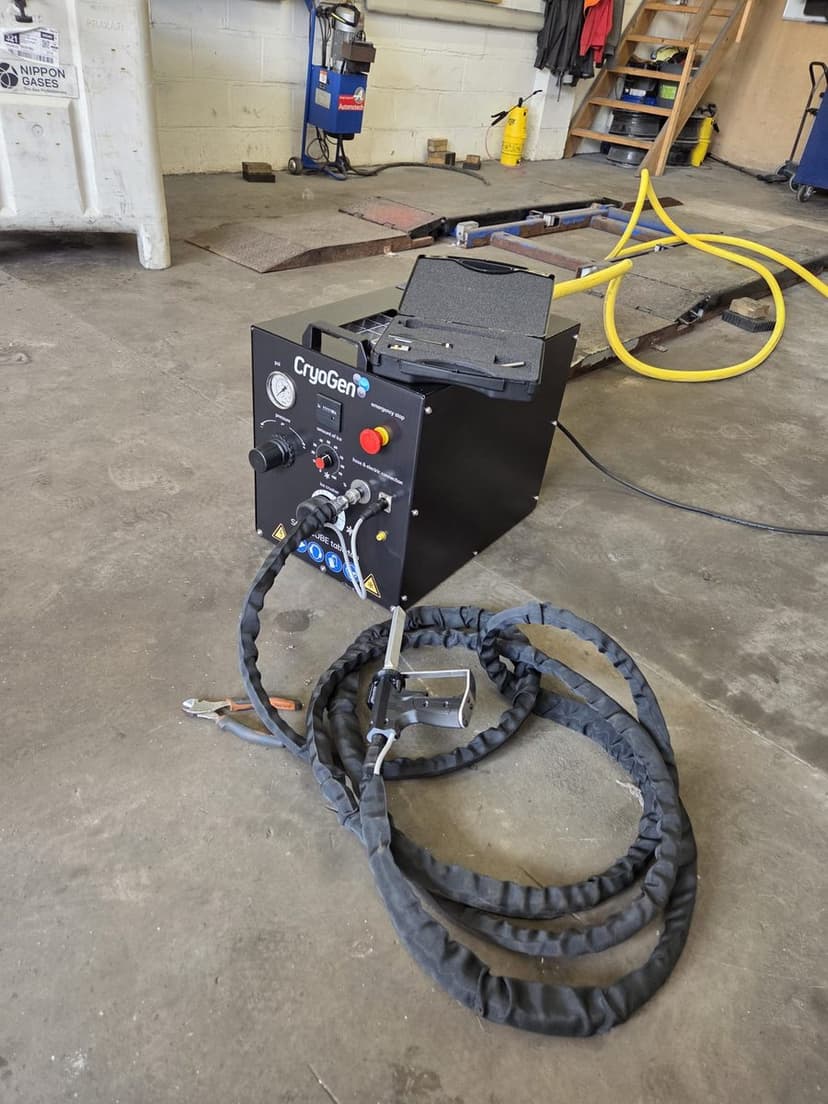
Inside the unit
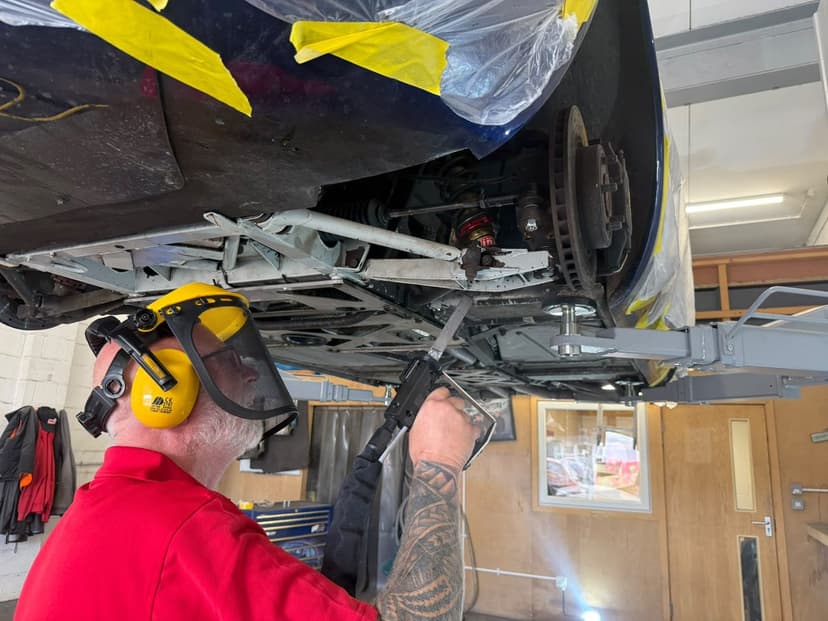
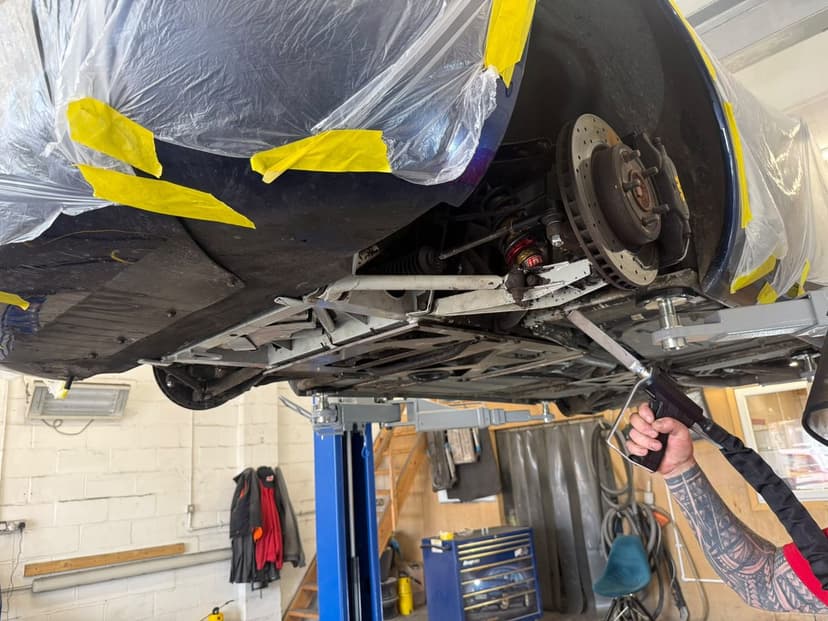
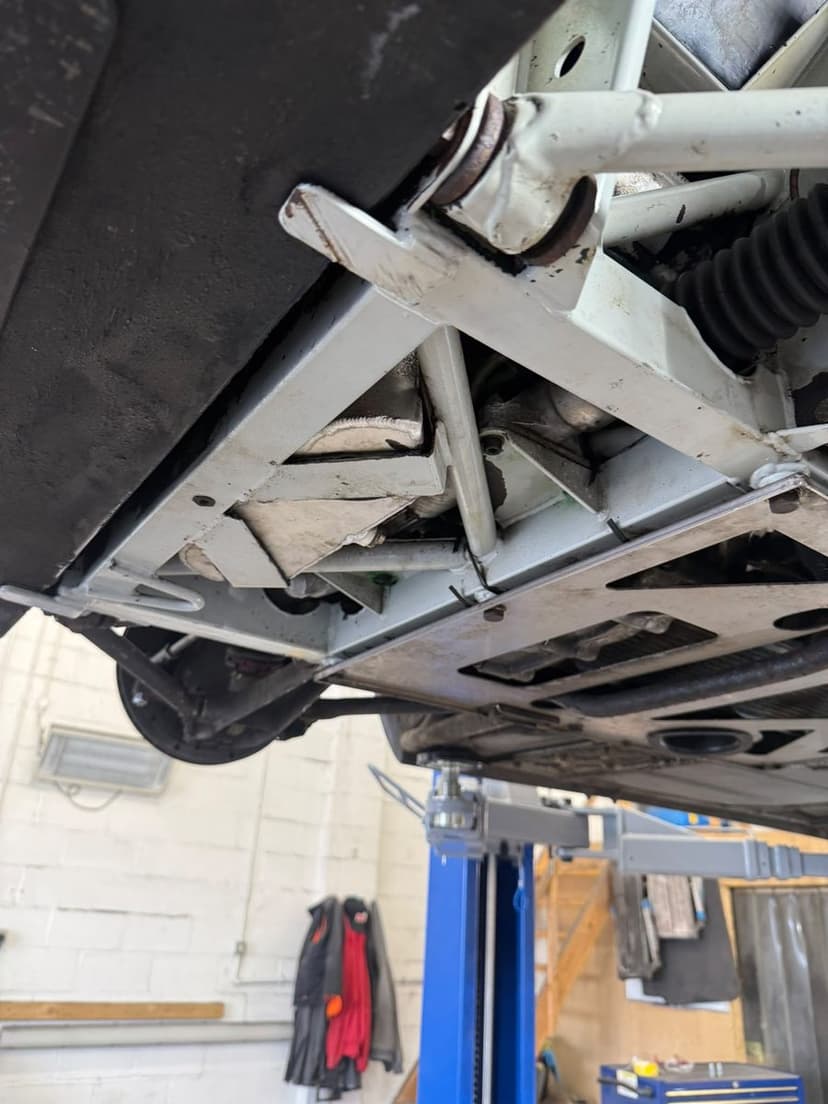
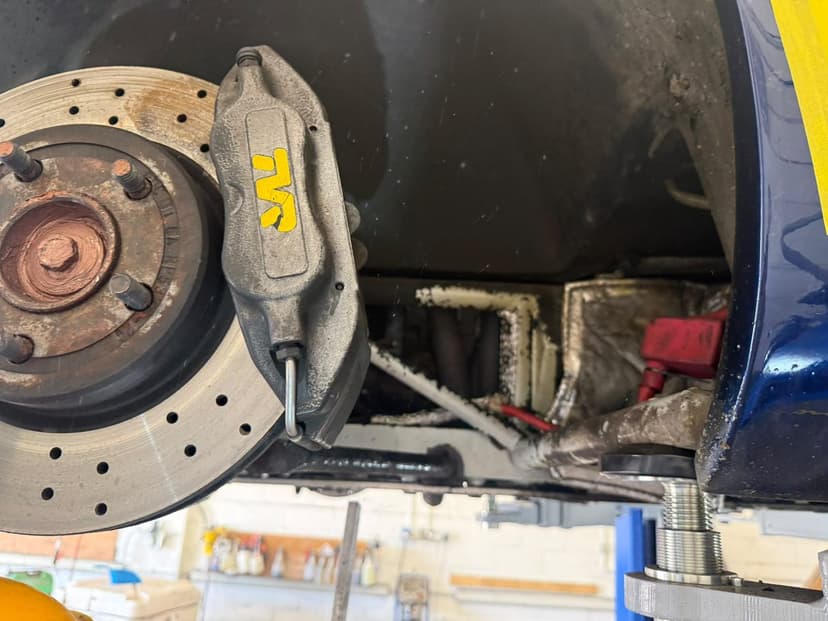
What it costs
How jobs are priced
As a guide, a full underside dry ice clean with protection afterwards is around £2,000 including VAT. If you would rather have the underside pressure washed before protection, that is around £500.
Every job is still estimated on inspection. The scope sets the price - a single area such as a set of wheel arches costs less than a full underside stripped back - and vehicle size moves it too, since a 4x4 takes longer than a hatchback. Call 07713 175704 for a free quote and we will confirm the price before anything is booked in.
Booking and what to expect
All work happens at Unit 53 Block 8, Old Mill Lane Industrial Estate, Mansfield Woodhouse, NG19 9BG. This is not a mobile service. The cleaning equipment lives at the unit and cars come to us by appointment, which is what lets us work in a controlled space rather than on a driveway.
Most jobs take a full day, so plan to leave the car with us. Vans and 4x4s are no problem. Dry ice blasting is bookable on its own or alongside other restoration work.
To book, call 07713 175704 or use the contact page. We are family-run and have been cleaning cars in Mansfield since 1999. If the car could use a full clean while it is here, our Premier Valet can run alongside.
Common questions
Dry ice blasting FAQs
Is dry ice cleaning safe for my car?
Yes, used correctly. The pellets sublimate on contact rather than grinding at the surface, so there is no mechanical wear on paint, seals or metalwork. In the areas we use it, it is gentler than steam or grit.
Is dry ice cleaning the same as dry ice blasting?
Yes, the same job under two names. Dry ice blasting is the older trade term and you will also see it called blast cleaning; cleaning is what most car owners search for.
Will it damage paint, seals or wiring?
Sound paint, rubber seals and wiring are not damaged by the process. Nothing wet or abrasive is left behind, which is why it works near looms, connectors and control units where steam creates a corrosion risk.
Does it remove rust?
No. It clears oil, grime, road film and failed underseal from around corroded areas so the corrosion can be assessed. Treating the rust is a separate step that follows the clean.
Do you also do sandblasting?
Yes, for wheels and calipers once they are off the car, where the old finish needs stripping back before refinishing. Anything we clean on the car is done with dry ice.
Do you come to me?
No. We are a fixed unit on Old Mill Lane Industrial Estate in Mansfield Woodhouse and cars come to us by appointment. We do not offer a mobile dry ice blasting service.
Do I need to leave the car with you?
Yes. Most jobs take a full day. We will call as soon as it is ready to collect.
Do you work on classic cars and restoration projects?
Yes, and they suit the method. Aged paint, brittle seals and period wiring are what abrasive cleaning tends to damage, so owners bring restoration projects to us before the rest of the work starts.
Where are you based?
Unit 53 Block 8, Old Mill Lane Industrial Estate, Mansfield Woodhouse, NG19 9BG. Call 07713 175704 to arrange a time. We take work from across Mansfield and the wider Nottingham area.